METAL PROCESSING. On -site nitrogen: when supply ceases to be a liability and becomes an industrial advantage
In many industrial plants, nitrogen is treated as just another consumable. It is purchased, stored, distributed, and used. However, when the process begins to depend on its availability, pressure, purity, or continuity, it ceases to be a mere auxiliary supply and becomes a critical component of production.
In sectors such as metal recycling, industrial waste recovery, materials processing, and certain metal transformation processes, the use of nitrogen can be key to ensuring stability, safety, process quality, and operational continuity.
The issue is no longer simply how much nitrogen is consumed. The truly important technical question is a different one:
> Does it make sense to continue relying on third parties when nitrogen can be produced directly on-site?
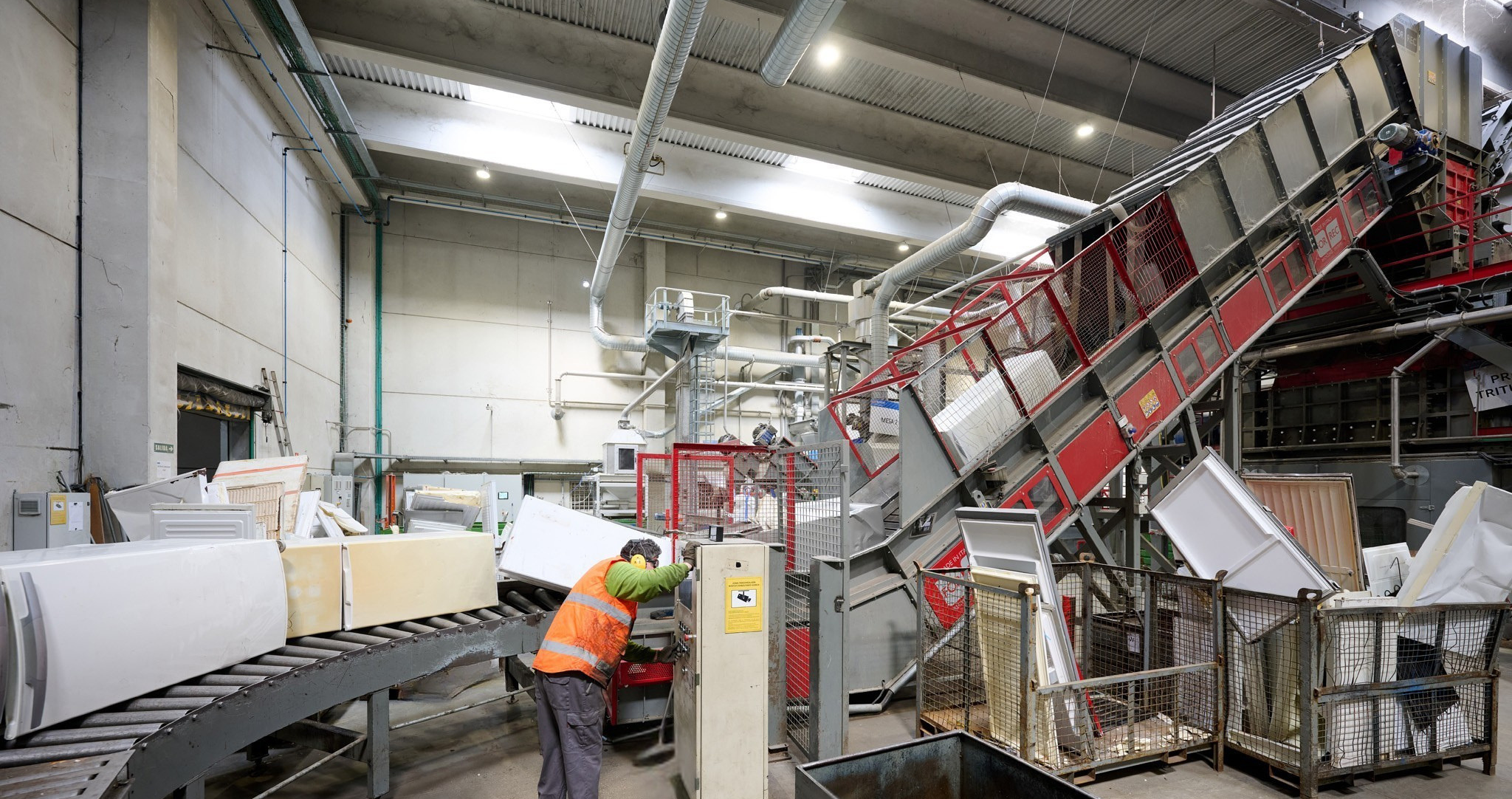
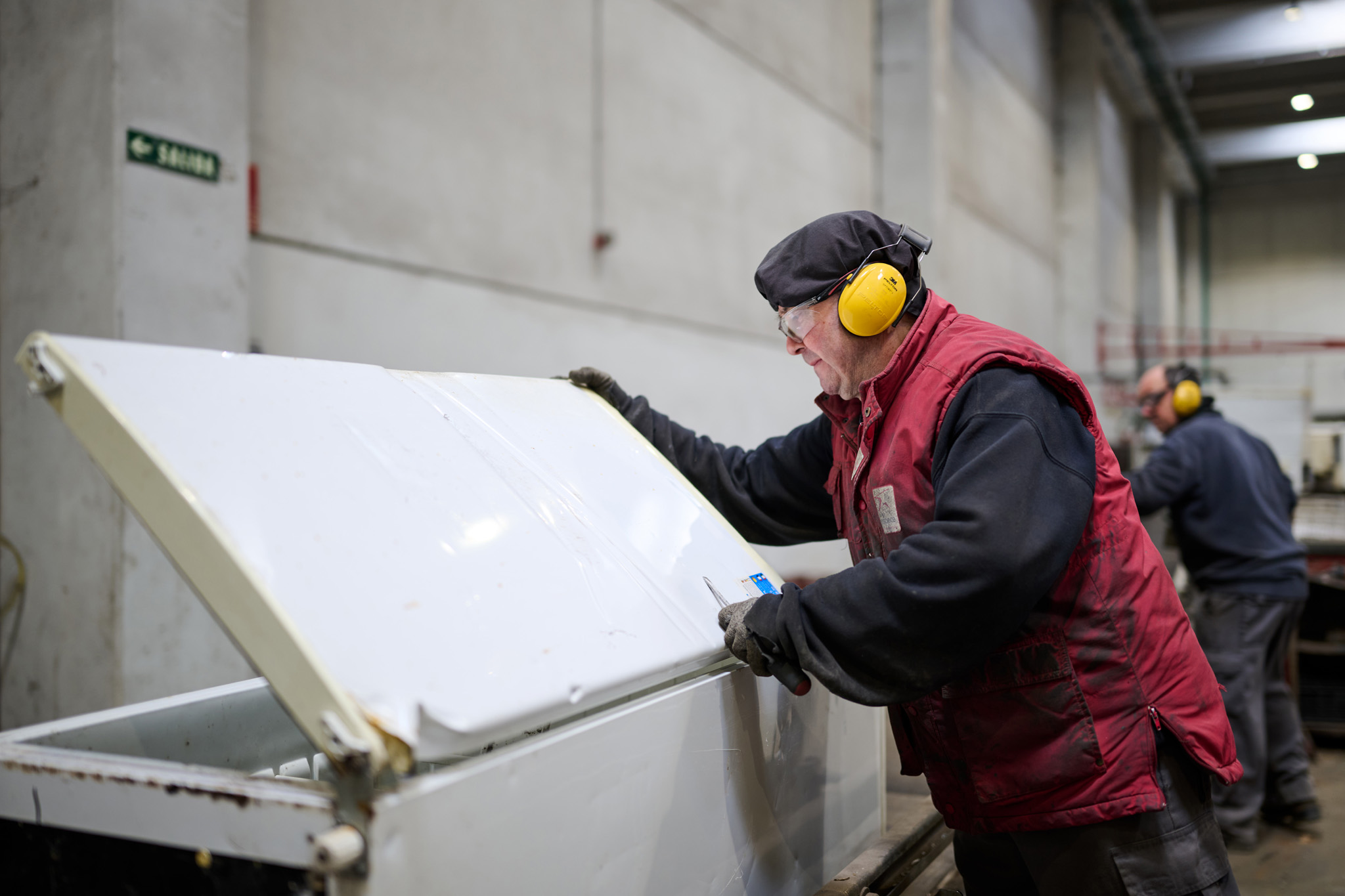 Disassembly of household appliances. Recycling process. Ecointegra (ASPACE NAVARRA).
The invisible gas that powers the entire process
Nitrogen is used in industry for one main reason: it is an inert gas. This means that it displaces oxygen and reduces unwanted reactions at various stages of the process.
In industrial applications related to metal recycling and materials processing, nitrogen can be used for:
- Process inerting.
• Protection against oxidation.
• Purging of lines, tanks, or equipment.
• Supply to internal consumption networks.
• Support for processes requiring controlled atmospheres.
• Bottling for internal use or distribution within the facility.
• Stabilization of operations with variable consumption.
In these types of environments, the requirements are not usually limited to simply “having nitrogen available.” What matters is having the necessary flow rate, at the right pressure, with controlled purity, and the ability to respond to spikes in demand.
> That is where on-site generation plants begin to make technical and economic sense.
From buying nitrogen to producing it: a paradigm shift
An on-site nitrogen generation plant produces nitrogen directly from atmospheric air. The process begins with air compression, followed by filtration and dehydration stages, and then separates oxygen using PSA technology, yielding nitrogen with the purity required for the process.
In the technical proposal developed by Gurpea Green Tech, the solution includes a PSA plant for nitrogen generation with a capacity of 210 m³/h and a purity of up to 99.99%, for both grid supply and bottling. The plant incorporates automated management, flow control, N₂ quality control, remote monitoring, data acquisition, traceability, and fault monitoring.
> These types of solutions do more than just replace a supply method. They transform the plant’s relationship with a critical resource.
The technical process: nitrogen production begins before the PSA
A well-designed on-site nitrogen generation plant doesn’t start with the generator. It starts with the quality of the compressed air.
Atmospheric air must be compressed, treated, filtered, and dried before it enters the PSA system. Only then can the equipment be protected, the process stabilized, and reliable production ensured.

In Gurpea Green Tech’s solution, the PSA generator uses two columns filled with activated carbon to separate nitrogen from pre-filtered and compressed air. The plant is designed for on-demand production, continuous nitrogen quality control, and automatic column balancing.
Autonomy doesn't just mean independence: it means control
One of the main advantages of generating nitrogen on-site is that it reduces reliance on external suppliers. But to limit the analysis to logistics alone would be an oversimplification.
Self-generation allows you to control variables that directly impact the process:
- Gas availability.
• Supply pressure.
• Nitrogen purity.
• Available flow rate.
• Data traceability.
• Alarms and malfunctions.
• Energy consumption.
• Storage capacity.
• Preventive maintenance.
• Adaptability to future expansions.
When a plant relies on external suppliers, any delays, logistical issues, or changes in availability can impact production. With an in-house facility, the supply chain is integrated into the industrial operation.
Nitrogen is no longer an external factor but becomes part of the plant’s technical infrastructure.
Signs that your current supply is starting to become a bottleneck
Before planning a self-generation facility, it is advisable to determine whether the current model is creating limitations.
Some common signs include:
- Rising nitrogen consumption.
• High costs per cubic meter.
• Reliance on scheduled deliveries.
• Risk of running out of supply.
• Need to store cylinders, blocks, or external tanks.
• Lack of traceability regarding actual consumption.
• Demand spikes that strain the system.
• Pressure drops at certain times.
• Difficulty in forecasting costs.
• Lack of flexibility when implementing new processes or expansions.
• Need for continuous supply across multiple shifts.
In industrial plants with significant energy consumption, these issues tend to arise gradually. First, as an operational inconvenience. Then, as a recurring cost. Finally, as a constraint.
It's not just about producing nitrogen—you have to use it effectively
An on-site nitrogen generation plant must be designed based on the process itself, not solely on estimated consumption data. One of the most common mistakes is sizing the facility based only on average consumption, when it is technically necessary to also analyze peak consumption, the simultaneity of usage points, operating hours, the number of shifts, the minimum required pressure, the necessary purity, and the potential need for bottling. These factors determine the actual generation capacity, storage volume, and supply stability.
Furthermore, the physical and operational integration of the plant is just as important as the nitrogen production itself. It is essential to assess the available space, the quality of the compressed air, environmental conditions, the connection to the existing network, safety requirements and regulations for pressure equipment, as well as monitoring needs, data traceability, and maintenance. In the case of Gurpea Green Tech’s solutions, the offering includes installation options ranging from on-site construction to shipping containers or climate-controlled modules—a flexibility that is particularly useful when there is no existing technical room available or when the goal is to minimize civil engineering work and expedite implementation.

Nitrogen Generation Plant for ASPACE NAVARRA - Appliance Recycling Plant
Purity: the point where more isn't always better
One of the most important technical decisions is to correctly determine the required nitrogen purity.
In many industrial applications, specifying a purity level higher than what is actually needed can increase installation costs, raise energy consumption, and result in an oversized system. Therefore, before selecting the technology, it is essential to understand what the process actually requires.
The plant developed for Ecointegra (ASPACE NAVARRA) processes nitrogen with a purity of up to 99.99%, designed for both direct supply to the grid and bottling.
Purity must be tailored to the end use. Inerting a volume, supplying an internal network, purging equipment, and supplying a critical process are not the same. Each application requires a balance between quality, cost, pressure, and flow rate.
Data, traceability, and remote control: the difference between a conventional plant and a smart plant
On-site nitrogen generation should not be viewed as a standalone system. It should be integrated as a technical facility with monitoring capabilities.
In modern facilities, it is particularly beneficial to have:
- Flow control.
• Purity measurement.
• Oxygen analyzer.
• Operational alarms.
• Remote monitoring.
• Data logging.
• Production traceability.
• Fault management.
• Maintenance management.
• Display via local screen or remote system.
This enables a shift from reactive to proactive management. The plant not only produces nitrogen; it also provides information about its own status and allows for the early detection of deviations.
> In the case of Gurpea Green Tech, the solution includes remote control, data acquisition and traceability, fault monitoring, and continuous nitrogen quality control.

Cost-effectiveness: when the cost per cubic meter changes the conversation
The economic impact of a self-generation plant depends on consumption, the current cost of supply, the required pressure, purity, operating conditions, and the initial investment.
However, when consumption is significant, the change can be quite substantial.
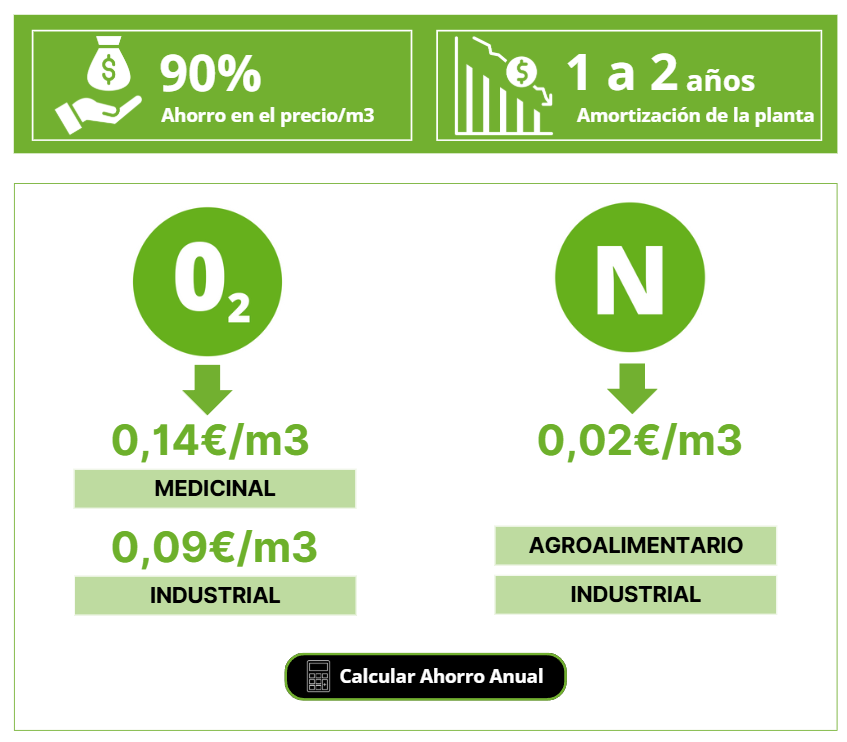
The solutions developed by Gurpea Green Tech offer savings of up to 90% per cubic meter and an estimated payback period of 1 to 2 years, in addition to the ability to produce continuously for storage.
This is a key point: profitability isn’t measured solely by the price of nitrogen. Indirect costs such as logistics, rent, container management, downtime, incidents, waste, lack of availability, and operational dependence must also be taken into account.
First steps if you currently rely on external vendors
For a company that currently purchases nitrogen from third parties, the first step should not be to request a quote for a plant. The first step should be to conduct a technical assessment.
1. Analyze actual consumption
It is advisable to collect historical consumption data, delivery frequency, volumes, billing, associated costs, and variations by shift or season.
2. Determine required pressure and purity
Not all applications require the same purity or pressure. Defining these values correctly prevents oversizing.
3. Measure demand peaks
The system must be designed to handle the worst-case scenario, not just the average.
4. Review the existing network
It is necessary to check pipe diameters, pressure drops, consumption points, distances, valves, regulation, and potential expansions.
5. Evaluate plant location
It can be installed in a technical room, a conditioned outdoor area, a module, or a climate-controlled container. The location affects civil engineering, maintenance, ventilation, accessibility, and safety.
6. Assess compressed air quality
The reliability of the PSA system depends largely on the quality of the inlet air. Filtration, drying, and pretreatment are not secondary considerations.
7. Define storage
The nitrogen tank must be sized to stabilize pressure, absorb peaks, and ensure continuity.
8. Integrate control and maintenance
A modern plant must be capable of monitoring, recording data, and facilitating preventive maintenance.
9. Calculate return on investment
El análisis debe comparar coste actual total frente a coste de generación propia, incluyendo energía, mantenimiento, amortización y beneficios operativos.
Next success story: a plant designed to produce, control, and store nitrogen
At Gurpea Green Tech, we have developed an on-site nitrogen generation solution designed to meet real-world needs for supply, autonomy, control, and traceability in industrial settings for Ecointegra (ASPACE NAVARRA).
The facility includes PSA generation, comprehensive air treatment, purity control, storage, automated management, and the capability to supply both the distribution network and bottling operations.
> In upcoming posts, we will provide more details about the project, the installation, the technical approach, the design specifications, and the final result.

Conclusion: Nitrogen as a Strategic Decision
On-site nitrogen generation is not a one-size-fits-all solution for every application, but it can be a highly competitive alternative when there is continuous demand, reliance on external suppliers, high costs, or a need for greater control.
In sectors such as metal recycling and industrial recovery, where availability, safety, and process stability are critical factors, on-site nitrogen production can turn an external supply into a technical advantage.
> The key is to do it thoughtfully: conduct a preliminary assessment, ensure proper sizing, implement correct integration, and monitor the plant from day one.
Click on the image to access the SAVINGS CALCULATOR WITH O2 AND N SELF-GENERATION.